WoodWoodLand workshop notes
The videos are real, the wording is slippery, and the useful answer for furniture makers is more interesting than a simple yes or no.
Search for “weld wood to metal” and you will find two very different kinds of videos. Some are experiments with dramatic titles. Others are furniture builds in which the maker welds a steel base and later adds a wood top. There is also a genuine field of research called wood welding, but that usually means joining wood to wood with friction—not running a MIG bead between a plank and a steel tube.
That distinction matters. A normal arc welder works by creating enough heat to melt and fuse metal. Wood does not melt into a compatible weld pool with steel. It chars, releases gases and can ignite. So a MIG, TIG or stick machine does not produce the kind of structural wood-to-steel weld implied by the search phrase.
For a woodworker, the useful skill is not “welding wood.” It is learning to fabricate the metal half of a mixed-material project well enough that the wood can be fitted cleanly afterward.
YESWELDER discount for WoodWoodLand readers: the exact saving and qualifying package are shown on the offer page. Sponsored Open the WoodWoodLand YESWELDER discount ↗
What the videos are actually showing
Three meanings hidden inside one search phrase
The safest way to read these videos is to separate the claim in the title from the physical joining method on screen.
1. The “wood welded to metal” experiment
The Archie5 video below is presented as an extreme experiment. It is useful because it shows why the phrase attracts clicks, but its title alone does not establish a repeatable furniture joint, a tested load rating or a normal welding procedure. We treat it as an experiment, not as instructions for attaching a tabletop.
2. Real “wood welding” is usually wood-to-wood friction welding
There is legitimate science behind welding wood. Researchers at EPFL and elsewhere have studied pressing and rapidly moving two wood surfaces until friction heats the interface. Published work describes the heat as softening and transforming material at the interface; after motion stops, that material solidifies into a bond. Rotary versions spin a wood dowel into an undersized hole, while linear versions vibrate one wood surface against another.
This is not the same process as MIG, TIG or stick welding, and it is not a method for fusing a board directly to a steel frame. It is a specialized wood-to-wood bonding process whose strength depends on wood species, moisture, pressure, speed, geometry and other controlled parameters. See the EPFL overview of friction welding of wood and the published tribology study for the technical background.
3. Wood-and-metal furniture videos weld the metal, then incorporate the wood
This is the category that matters for a YESWELDER article. In The Practical Engineer’s coffee-table build, the description explains that the steel legs are welded as assemblies, openings are cut in the reclaimed top, and the metal is integrated into the table. In Weld.com’s end-table lesson, the published outline covers layout, welding uprights, twisting and attaching the frame as separate stages. Neither video turns wood and steel into a conventional shared weld pool.
Methods actually shown in project sources
How makers combine a welded frame with wood
Rather than inventing a single “correct” attachment, we compared several documented builds. The common pattern is to finish the hot work first and provide a separate way for the wood component to sit on or fasten to the frame.
Weld small mounting tabs to the steel frame
Jen Woodhouse’s published wood-and-steel coffee-table plan tells the builder to weld the frame joints and then weld tabs that attach the steel base to the wood cabinet. Bruce Ulrich’s live-edge end-table build also describes welding tabs that secure the top and lower shelf. The exact tab size, hole and fastener still need to suit the project and wood movement.
Shape the wood around the metal design
The Practical Engineer’s coffee-table video uses openings in the reclaimed top so the steel legs become part of the visual design. This is a specific maker solution, not a universal fastening rule. It shows that “wood meets metal” can mean fitting one material around the other rather than trying to fuse them.
Build and finish the metal base before final assembly
Miller’s side-table guide welds and smooths the base before the top is mounted. The project uses adhesive for its marble top, which is appropriate to that particular plan; it should not be generalized into a structural wood-furniture rule. What is broadly useful is the order of work: fabricate, grind and finish the hot metal stage before the top is installed.
Use the attachment specified by the plan
Solid-wood tops move seasonally, so a rigid attachment copied from a non-wood project can cause problems. Follow a tested furniture plan or qualified design for tab placement, fastener type, hole geometry and load. The welder creates the steel mounting points; it does not decide the woodworking details for you.
Choosing the machine
What a woodworker needs from a welder
Most furniture projects use mild-steel tube, angle or flat stock. The most useful machine is the one that matches the actual material, available electrical circuit, process and practice time—not the largest number on the front panel.
MIG and flux-core are the most relevant starting processes
Solid-wire MIG with shielding gas is popular for indoor fabrication because it can leave a cleaner result with less slag. Self-shielded flux-core does not require a gas cylinder and can be convenient outdoors, but it generally brings more smoke, spatter and cleanup. Both still require the correct polarity, wire, settings and technique for the joint.
Dual voltage matters when your projects grow
A 120V machine can be useful for lighter material and a shop without a 240V outlet. A 120/240V machine gives you another operating range when connected to a suitable circuit. That does not mean every thickness can be welded in one pass; the manual’s material chart and duty-cycle information still govern the setup.
Synergic controls help with setup, not with judgment
On the YESWELDER MIG-205DS PRO, synergic MIG is intended to coordinate common settings and make the machine more approachable. It does not replace joint preparation, fit-up, tack-welding, distortion control or practice on scrap that matches the project material.
Four current machines
A practical comparison for mixed-material projects
These are not ranked as if every reader had the same shop. The YESWELDER is our featured value option; the other three show what changes as you move toward a compact 120V machine or a more expensive shop platform.
| Machine | Input | Published processes | Why a woodworker might consider it | Product page |
|---|---|---|---|---|
| Featured offerYESWELDER MIG-205DS PRO | 110/220V | MIG, flux-core, Lift TIG, Stick | Dual voltage and synergic MIG in a value-oriented multiprocess package. | Get our YESWELDER discount ↗ |
| Compact alternativeForney 140 MPx | 120V | MIG, flux-core, DC TIG, Stick | A smaller 120V machine aimed at portable home, farm and repair work. | Shop on Amazon ↗ |
| Step-up optionHobart Multi-Handler 200 | 120/240V | MIG, flux-core, DC TIG, Stick | Simple controls, dual voltage and published capacity up to 3/8-in. mild steel. | Shop on Amazon ↗ |
| Premium optionMiller Multimatic 215 PRO | 120/240V | MIG, flux-core, DC TIG, Stick | Premium controls and support for a frequently used home or light-fabrication shop. | Shop Miller ↗ |
Closer look
Where each welder fits
The descriptions below are based on the manufacturers’ current product pages. They are not presented as hands-on test results.

Our featured offer
YESWELDER MIG-205DS PRO
A reasonable bridge between a woodworking shop and a first metal-fabrication setup.
YESWELDER describes this as a dual-voltage multiprocess machine with synergic MIG control. For someone making table bases, brackets, shelf frames and general repairs, that combination is attractive because it can begin on 110V and make use of 220V when the shop and job call for it.
The machine is also described as compatible with steel, stainless steel and aluminum when equipped and configured correctly. Check the selected package carefully: a listing for the machine alone is not the same as a bundle with every TIG or aluminum accessory.
YESWELDER discount for WoodWoodLand readers
Use our link to see the current discounted offer. Because YESWELDER promotions and bundles change, the offer page and checkout are the source of truth for the final saving.
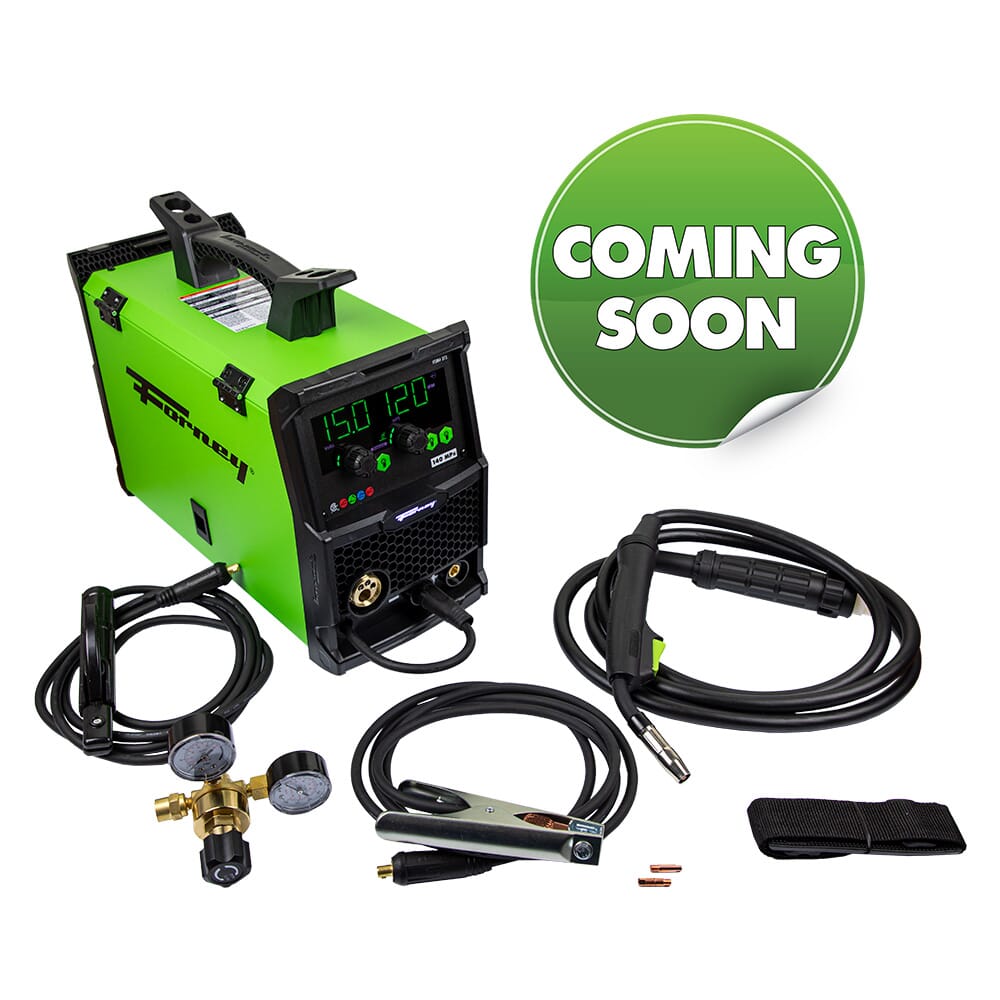
Compact 120V alternative
Forney 140 MPx
Forney positions the 140 MPx as a 120V multiprocess machine for portable home, farm and repair work. The brand publishes MIG, flux-core, Stick and DC TIG capability up to 140 amps, with material capability up to 1/4 inch under the conditions specified by Forney.
Its appeal is simplicity and portability rather than maximum headroom. It makes more sense for lighter brackets, thin-wall tube and repair jobs than for a buyer deliberately planning around thicker stock and 240V output.
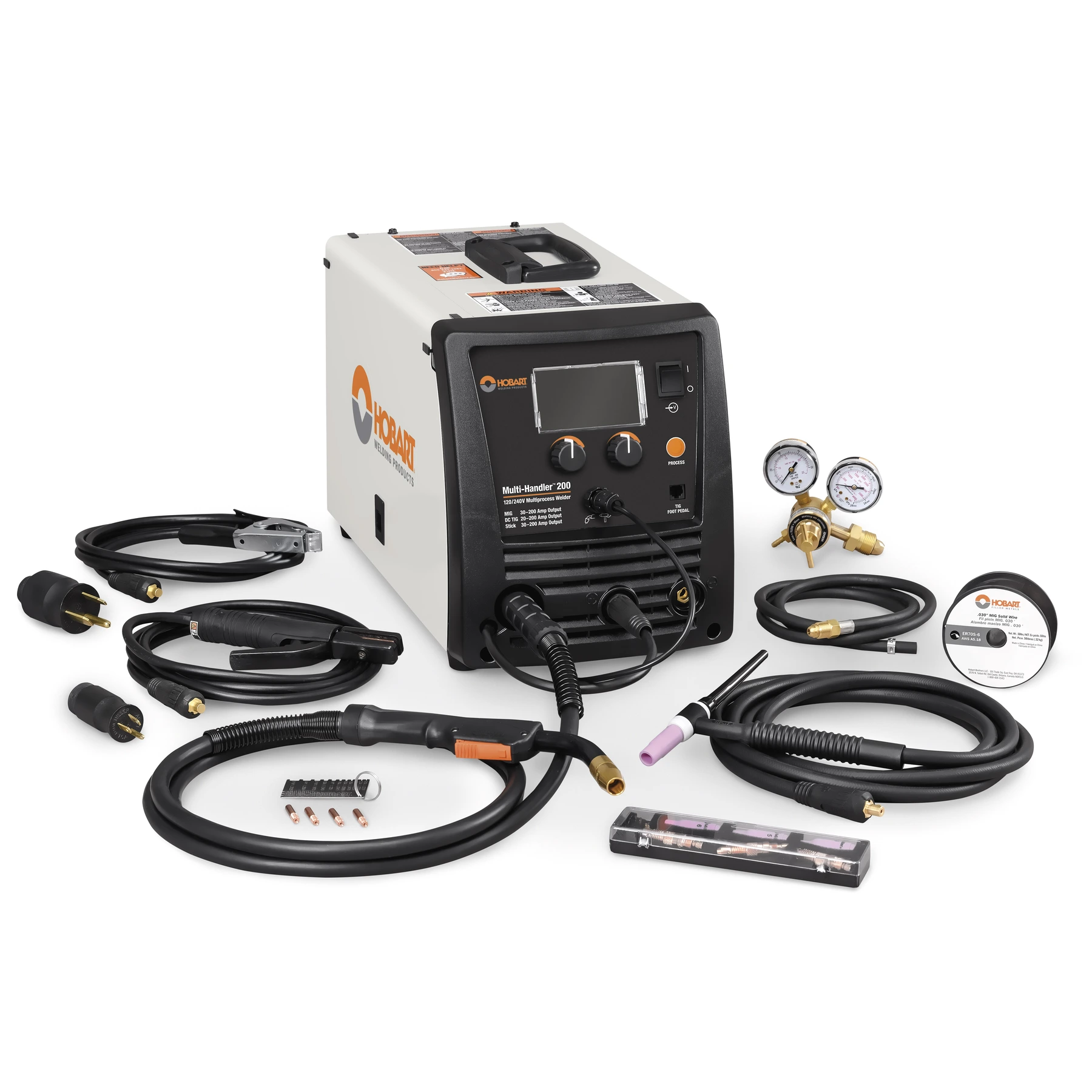
Straightforward step-up
Hobart Multi-Handler 200
Hobart’s Multi-Handler 200 moves into 120/240V operation and publishes capacity up to 3/8-inch mild steel. The machine uses two-knob controls, supports MIG, flux-core, Stick and DC TIG, and is described as spool-gun ready.
This is the type of step-up that starts to make sense when furniture is only one part of the workload and the machine will also see gates, equipment repair or heavier shop fixtures.
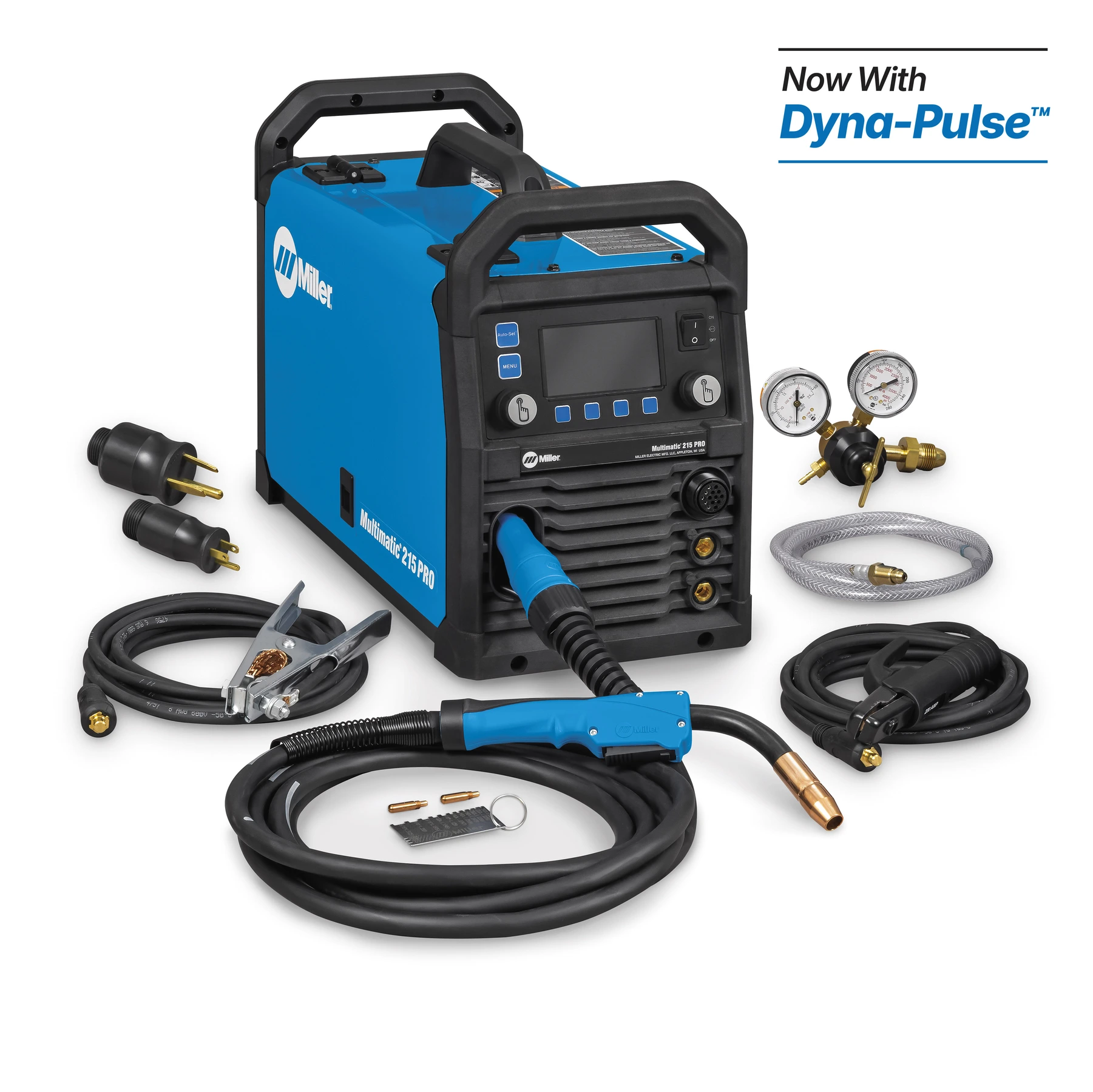
Premium shop option
Miller Multimatic 215 PRO
Miller’s Multimatic 215 PRO is the premium comparison point. It combines 120/240V input with MIG, flux-core, Stick and DC TIG processes, and Miller publishes welding capability up to 3/8-inch steel and aluminum with the appropriate process and setup.
The extra spend is easier to justify in a shop that welds frequently and values refined controls, dealer support and a long-term equipment platform. For a few table bases a year, it may be more machine than the project requires.
A woodworking shop changes the fire-risk calculation
OSHA’s welding standard specifically calls out wood shavings and other combustible materials around hot work. Its general requirements call for combustible material to be moved or protected, suitable fire-extinguishing equipment to be ready, and a fire watch under defined conditions. OSHA’s woodworking guidance separately notes that fine wood dust can ignite more easily than whole lumber.
- Do the welding in a designated metalworking area rather than on a wooden assembly bench.
- Remove sawdust, wood scraps, finishes, adhesives and solvents before welding or grinding.
- Complete and cool the steel fabrication before bringing the finished wood component into the assembly area.
- Read the welder manual and follow local electrical, ventilation, PPE and hot-work requirements.
OSHA 1910.252 welding requirements ↗
OSHA woodworking fire and explosion guidance ↗
The phrase is partly a hook—but the project category is real
You cannot use a conventional arc welder to create an ordinary structural fusion weld between a board and a steel leg. Viral experiments do not change that. Wood friction welding is real, but it is a separate wood-to-wood process. The practical opportunity is mixed-material furniture: fabricate a steel component, provide documented mounting points, finish the hot work, and then attach or fit the wood according to a sound furniture plan.
For that work, the YESWELDER MIG-205DS PRO is a credible value-oriented place to start because it combines dual voltage, synergic MIG and several processes in one machine. It is still a tool that demands preparation and practice—not a shortcut around either welding or woodworking.